Engagement was Never the Goal—Thinking Was
For 28 years, I thought I knew what an engaged classroom looked like. I was wrong about what I was seeing.
I knew I needed to start the year off right—capture their attention, “win” them over, and be full of personality to engage them. Inspired by Harry Wong's "First Days of School," I decided to ignite a fire...literally. I crafted a number magic trick where students would all end with the same number, and I concealed this number on my overhead projector underneath a crumbled-up piece of flash paper. The prompts went well, students calculated, and I lit the match. The trick was a success; the students pretended to be impressed, and I felt elated. I had successfully done it. I had engaged, performed, and finessed my way into their participation and compliance. And to me, active participation meant engagement, and that was what a successful class was all about.
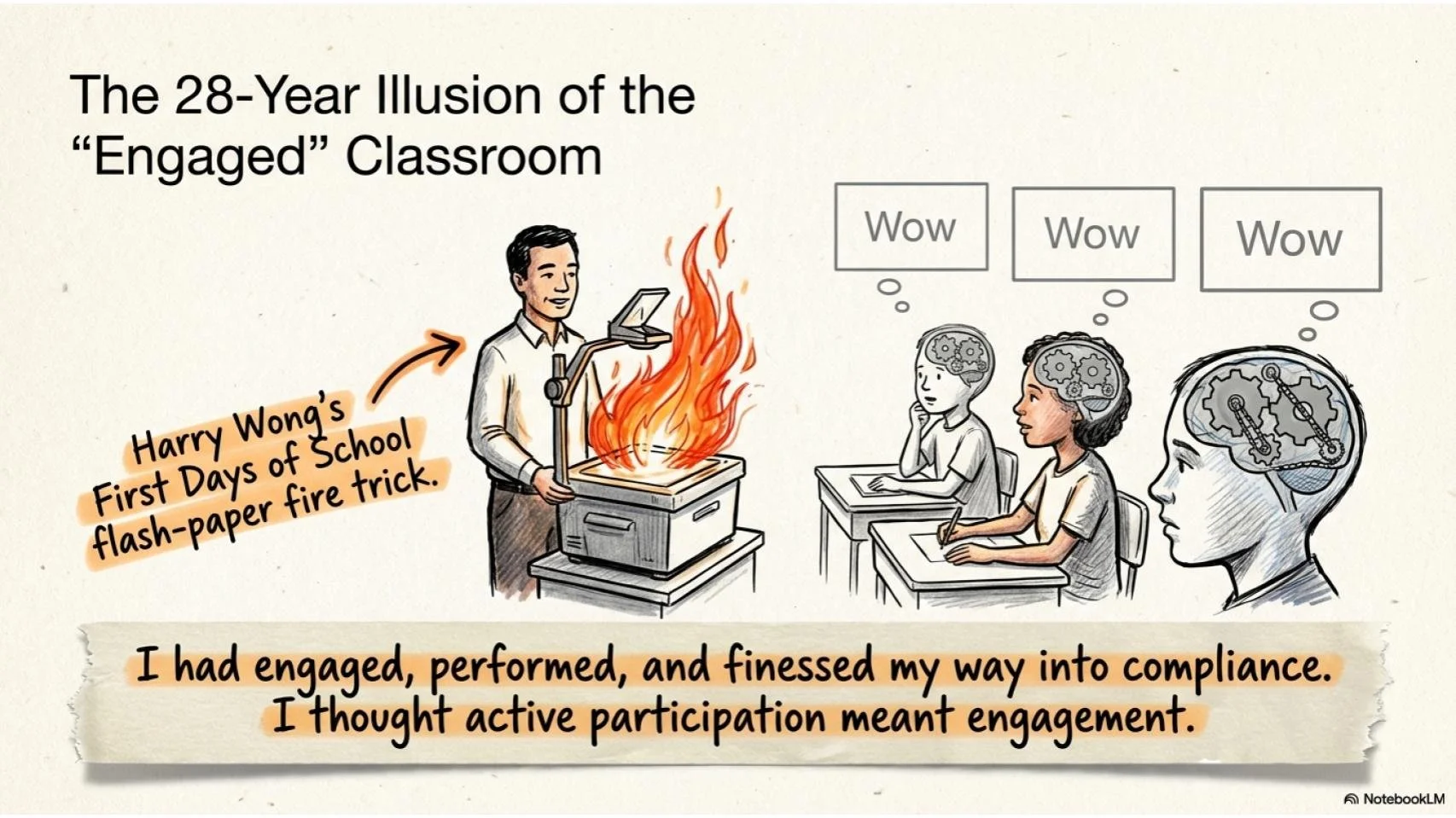
Throughout the years, my strategies to engage students evolved. I went from classroom economies with “Meitler Bucks” to team competitions. I created math clubs and school-wide challenges. I celebrated Pi Day like it was a national holiday. I flipped my classroom before flipping classrooms was a thing. I put students at whiteboards, put graphing calculators in their hands, put programmable rovers on the floor, and wired motion detectors to their movement.
Every year, a new tool. Every tool, the same hope.
All of this was an attempt to entice students into participating, engaging, and studenting (performing the behaviors of a student without doing the thinking of one). Because if they looked engaged and were compliant, they surely must be learning. But this assumption would soon be challenged.
My awakening into student engagement began at the Carnegie Learning Summit, where I watched a collaborative classroom lesson modeled with their math curriculum. This model drew out conversations in a way that could be heard and built upon. As I implemented Carnegie Math, the collaborative classroom approach revealed my goal all along: to encourage students to actively participate in math. I was suddenly hearing ideas, mistakes, corrections, and reattempts. I was getting a peak inside their brains and understanding their thinking. However, students quickly reverted to their usual classroom behaviors of compliance, imitation, and rote learning.
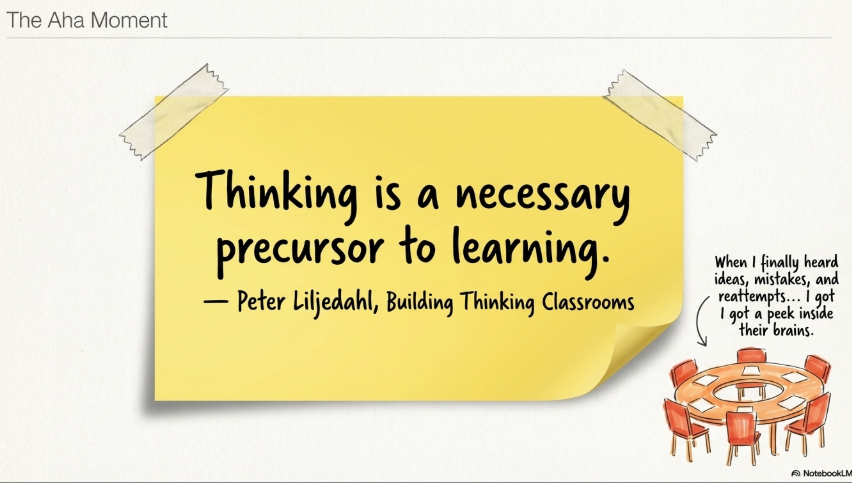
Enter Peter Liljedahl’s Building Thinking Classrooms approach. Peter began watching hundreds of students receive excellent instruction and act like extremely compliant students, who seemed to be showing high levels of engagement (based on our traditional model of what an engaged student looked like). But what he noticed was that very few students were actually thinking. As Peter states, “Thinking is a necessary precursor to learning.”
And it got me thinking…
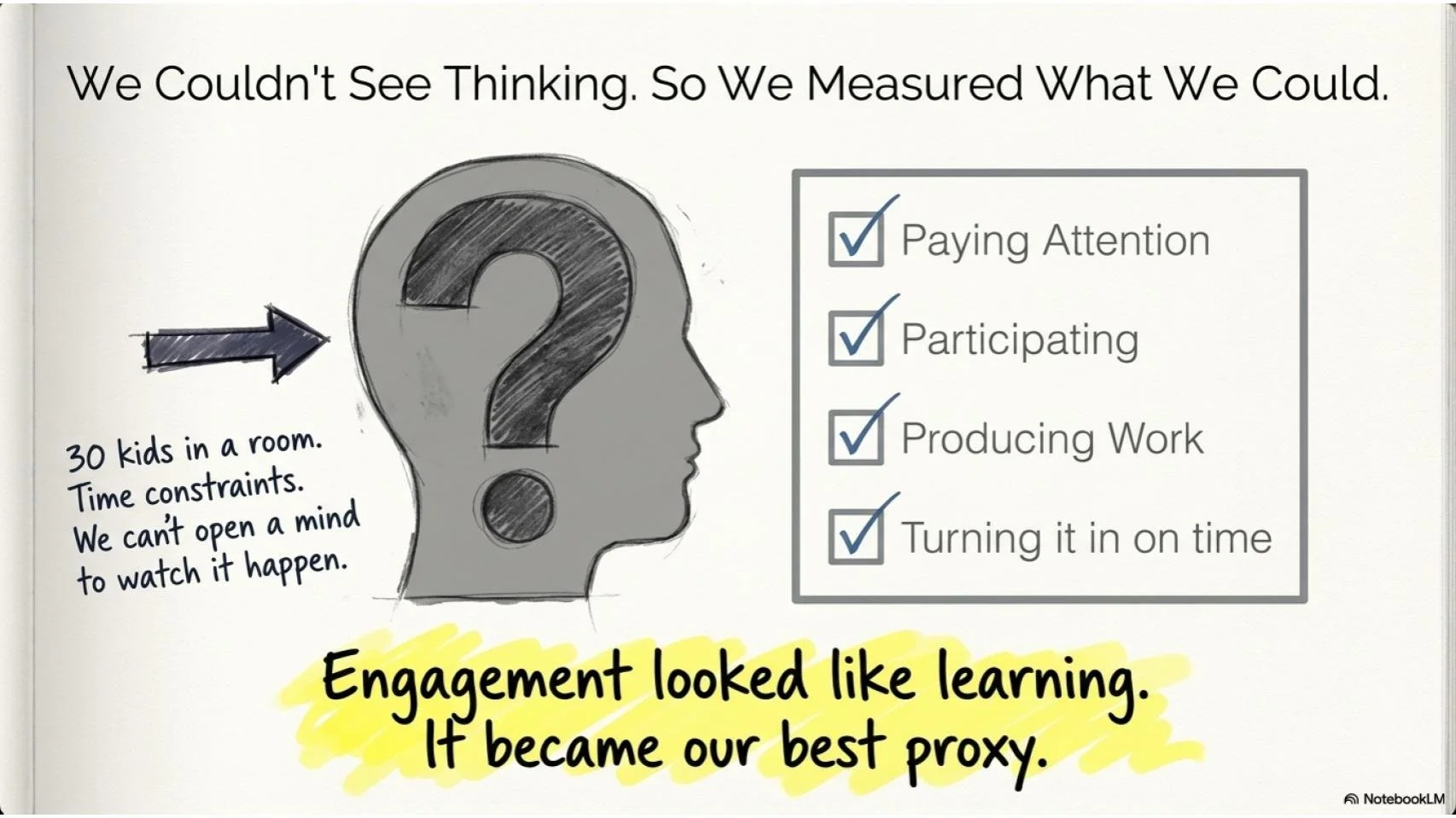
If thinking is the most important element to learning, then why did I spend much of my career trying to engage students? Because I couldn’t see thinking. Not really. Not with 30 kids in a room. Not with time constraints. I couldn’t open up a student’s mind and watch what was happening. So I measured what I couldn’t see.
Are they paying attention?
Are they participating?
Are they producing work?
Are they turning it in on time?
Are they engaged?
I assumed that if those things were happening, then thinking and learning must also be occurring underneath. But did any of these factors actually indicate thinking?
“And then AI entered the room and made every external sign of engagement possible with absolutely ZERO thinking (participating, being on task, producing work, and submitting on time). ”
Students have always been able to go through the motions, copying from friends and appearing attentive while mentally absent, but for the first time in the history of education, a student can appear completely engaged while doing absolutely no thinking at all. AI made it so easy, so fast, so flawless, that the gap between the appearance of learning and actual learning became impossible to ignore.
Here’s what’s interesting about that moment. When we suddenly couldn’t trust engagement as a measure anymore, we didn’t say we need students to be more engaged. We said we need to know if they’re actually thinking. We went straight for the real thing.
The exciting thing about exposing this gap is the questions educators are now asking.
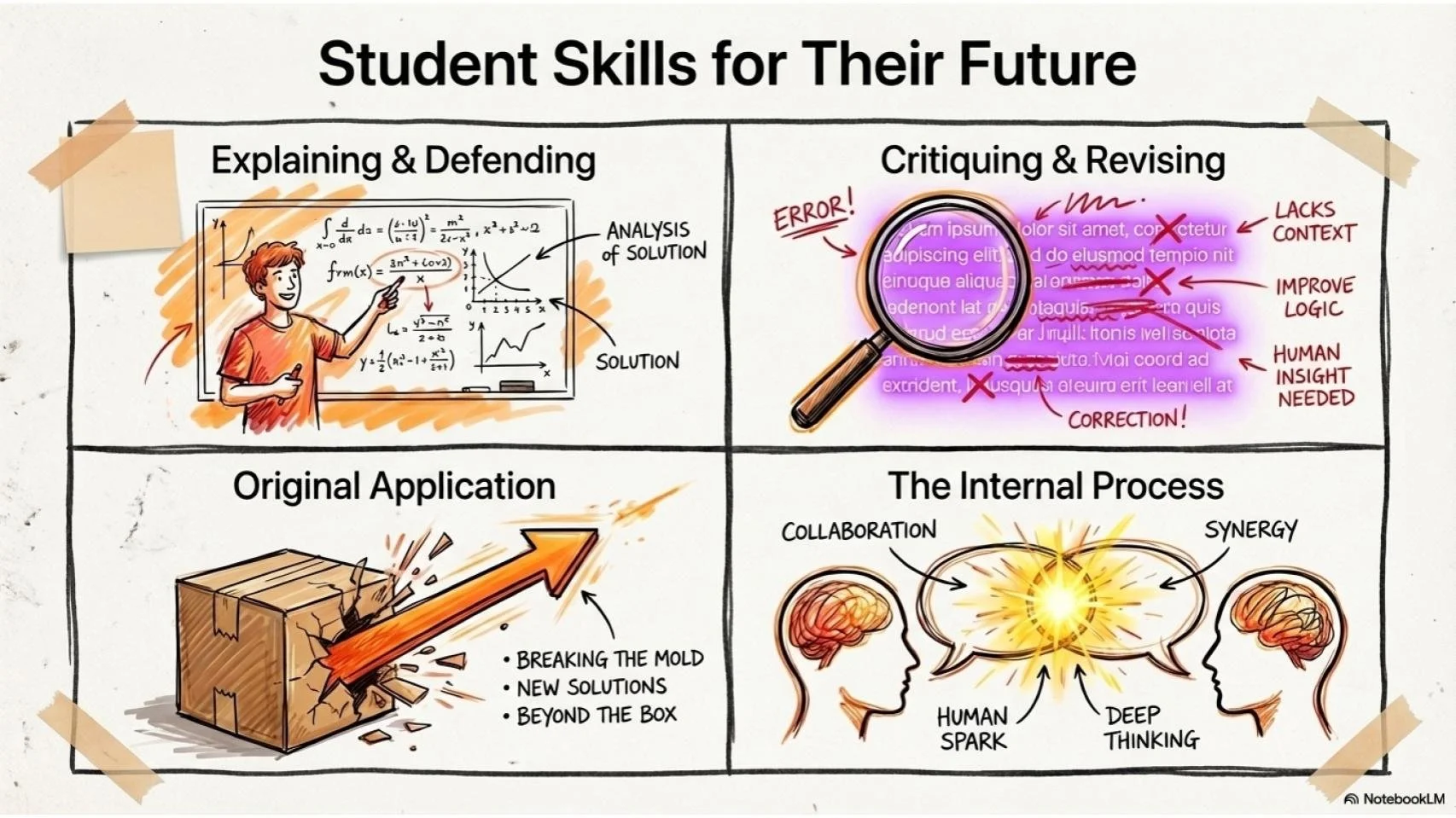
Questions like:
Did they understand the material, or did AI understand it for them?
Can they explain their reasoning?
Can they defend their choices?
Can they take this idea and create something new?
“We aren’t saying, ‘We need more engagement’. We are saying, ‘We need to know if they are actually thinking.’”
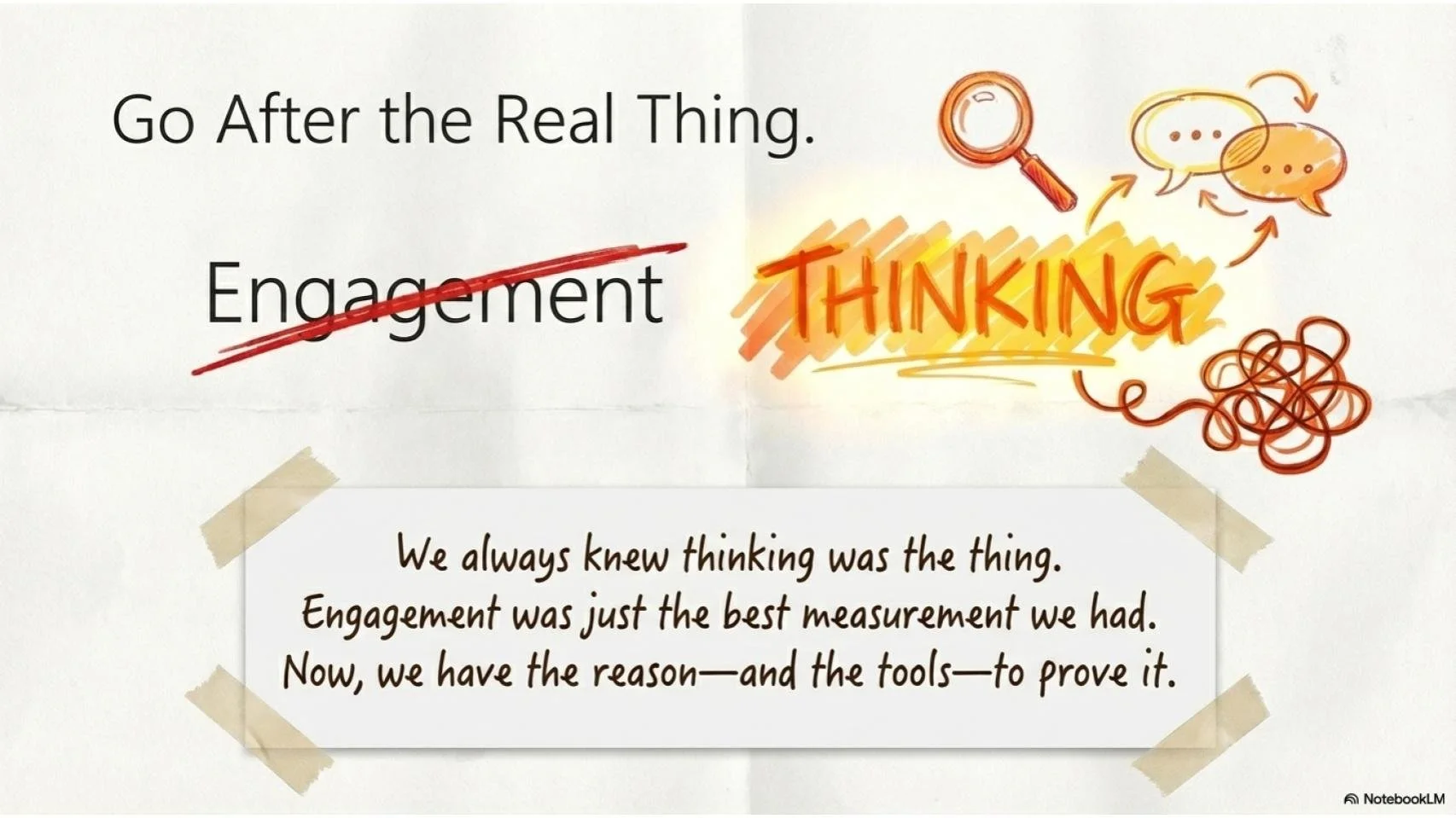
We always knew thinking was the thing. Engagement was just the best measurement we had for it. AI took that measurement away. And in the most uncomfortable, inconvenient, disruptive way possible, AI forced us to finally go after the real thing.
Not the appearance of learning. The actual goal.
Whether we are ready to hear it or not, educators cannot settle for engagement anymore. Engaged students are not the full picture. We have to go after thinking.
Not compliance. Not performance. Not the appearance of thinking.
So here's the question I'm sitting with, and the one I'd invite you to sit with too.
Are you measuring thinking when you look at your classroom, the tasks you assign, the tools you use, and the things you put in the gradebook? Or are you measuring the appearance of it?
AI didn't create that question. It just made it impossible to ignore. I think that's actually good news. Because now educators are finally asking the right questions, ones that match what students will need to be successful in their workforce and world.
Engagement was never the goal. Thinking was. And for the first time, we have both the reason and the tools to prove it.